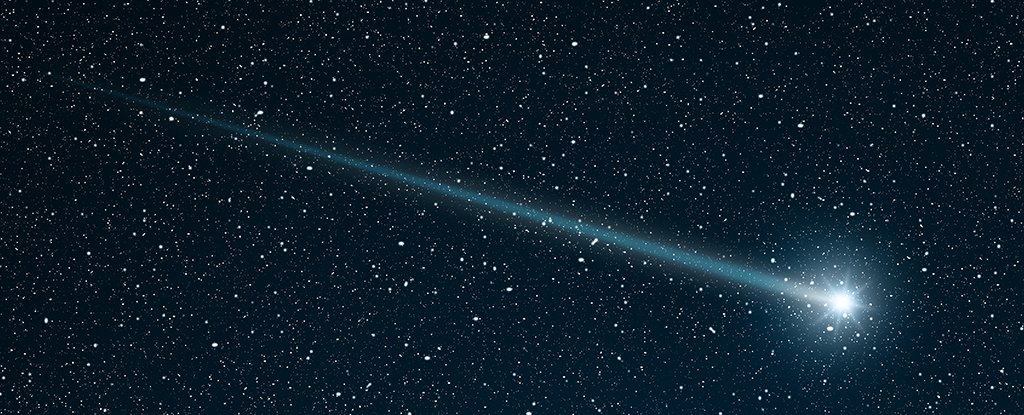
lights on his age like a comet into the paths of the planets, to whose well-regulated and comprehensible arrangement its wholly eccentric course is foreign.
Unlike the work of talent, which simply exceeds in excellence the work of contemporaries and is therefore easily appreciated by them, Schopenhauer argued that a work of genius differs not in mere degree of excellence but in kind of vision. It is therefore often ridiculed or, worse yet, entirely ignored by contemporaries, to be rediscovered and appreciated only by posterity.
Are you worried about the collapse of civilization? It's worth remembering then, that civilization does not depend on how well the stock market is doing, GDP or your 401K. Civilization does not depend on the latest strategic defense system, or who gets elected
Civilization depends on civility.
So stop worrying and just be civil. The rest will take care of itself. Always has.
The next time you find yourself facing an expanse, whether it is a howling sea, a green valley, or a cold night sky, allow yourself to become aware of the envelope of air that you are in. Then try to notice the continuity of the air and the space before you. Breathe. Really breathe.
As you breathe, visualize the air and the space moving in and out of your lungs. Allow yourself to feel the life that the air and space support in YOU. Every breath, over the course of your whole life, IS your life. Allow yourself to feel this natural exchange of life.
When you are ready, take a few deep breaths and with one, say your name. You can whisper it, just say it normally or shout it out loud. Keep your eyes open. After you say it, listen and watch. Watch the “you” in your name disperse into the space. Then listen for the space's response. What do you hear? And more importantly, what do you feel? Write it down.
We do this exercise early in our workshops because what you feel is an accurate reflection of your relationship to the cosmos. By doing this exercise occasionally, over time, we can use it as a way of checking in and seeing how your reflection changes. Eventually, you will find great joy in doing this exercise in even the most mundane scenarios and spaces.
In the woods you can imagine the mixing of your breath with that of the squirrels, birds, trees and crickets. In more public spaces, you can also imagine how sharing the air-space of everyone else unites us. This is the reality of an interconnected humanity and an interconnected cosmos.
The learning here is to understand how your body takes in the stuff of the world, reshapes it into you, and returns it changed to the world. In the process the world is changed too. The world imprints on you and you, in turn, imprint that unique thing that you are back into the world. But the two are inseparable. Neither exists without the other. The simple act of breathing is a visceral and vital reminder of the reality of this eternal, cyclical relationship. This is the cycle of being that's always right before your eyes and in the very act of breathing.
I was driving down the highway rushing to some adult meeting, somewhere and saw a wooded area and swamp. I felt an attraction to go experience it. When I found it, before I knew it, the swamp had snuck up on me and flipped a familiar but often forgotten switch.
When I was a kid, I spent a LOT of time in this kind of unstructured exploration, getting drawn in, developing a special relationship with the world. This little swamp experience reminded me. Thanks!
Last summer, on the way back in from a surf, I had an amazing encounter with a couple of American horseshoe crabs (Limulus polymephus) doing their thing.
If you look really closely you can see how the pusher leg works. The last leg has a really cool articulated shape that splays out when the animal pushes it against the sand (like an inside-out umbrella).
The pusher leg with foot closed...
...and open (as when pushing against sand)
I always wondered about why it had that shape and now I see!! In the video you too can see how well the pusher leg works. Awesome, beautiful, and WAY COOOL!
I’ve always sensed a certain incompleteness to the argument that we need to simply think about our children in order to care about and implement environmental change. Caring for our children is certainly a strong and compelling emotion that we can all share. But there is still something fundamentally incomplete about the idea that this can be enough. No, it’s not just about loving our children, it's about feeling love for nature and planet directly. It's is about expanding a similar kind of love we feel for our children to the larger community of living things, and then, by-default, to our children, our pets, our planet and ourselves. This is a fuller expression of gratitude that can transcend the limited seeing of only our children’s well-being as important. Look around, there is a lot of damage done by people striving to take industrious care of their offspring. As far as love is concerned, this might ultimately be an all or nothing proposition.